Calming Sensory Activities for Kids: Quick, Gentle Ideas
What are some calming sensory activities?
Calming sensory activities help the nervous system shift from “too much” to “more manageable.” The best options are predictable, gentle, and easy to stop at any time. Below are practical ideas to try at home, in the car, or during a busy day.
Deep pressure and “heavy work”
Many kids settle faster with safe, steady pressure. Try a snug (not tight) blanket, a lap pad, or a pillow “sandwich” where your child lies between two pillows. Heavy work can be just as soothing: wall push-ups, carrying a small bag of books, pushing a laundry basket, or pulling stretchy bands. Keep it short—1 to 5 minutes—then reassess.
Slow movement for vestibular calm
Fast spinning can rev kids up, so choose slow, rhythmic motion instead. Rocking in a chair, gentle swinging, or a slow “boat” sway while sitting on the floor can help. A short walk with a steady pace and simple destination (like “walk to the mailbox and back”) also provides soothing movement without adding pressure.
Soothing touch and fidgets
Tactile input can be calming when it’s chosen by the child. Offer soft fabrics, a smooth stone, therapy putty, or a simple fidget they can squeeze. Some kids prefer cool sensations—holding a chilled water bottle wrapped in a cloth—while others like warmth, such as a warm (not hot) rice sock on shoulders.
Sound and visual “quieting” activities
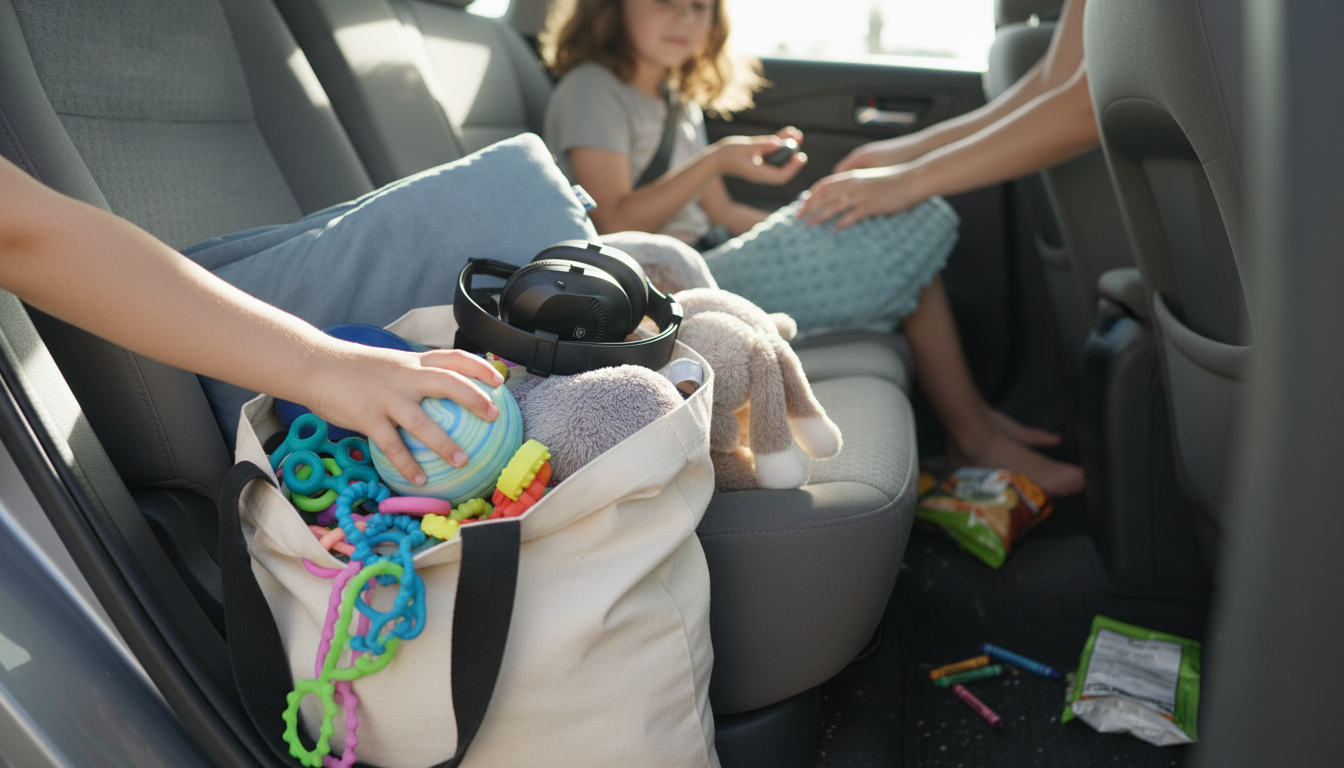
Lowering sensory “volume” can be a game-changer. Use noise-reducing headphones, soft instrumental music, or a steady sound like a fan. For visual calm, dim the lights, face away from busy rooms, or use a small pop-up tent/blanket fort as a low-stimulation corner.
Breathing and simple routines
Pair sensory tools with an easy routine: “sit, squeeze, sip, breathe.” Try five slow belly breaths, blowing bubbles, or breathing in while tracing up a finger and out while tracing down. A predictable sequence helps the body feel safe.
For more detail on triggers, signs, and step-by-step support, visit this guide to calming sensory overload in kids.
FAQ
How can I tell if my child is overstimulated or just tired?
Overstimulation often shows up as sudden irritability, covering ears/eyes, meltdowns, or frantic movement after a busy environment, while tiredness usually builds gradually with yawning, droopy eyes, and slower responses. If quiet input (dim light, deep pressure, reduced noise) helps quickly, sensory overload may be a factor.










Leave a comment