Gentle Manners for Ages 2–5: Scripts, Routines, Play
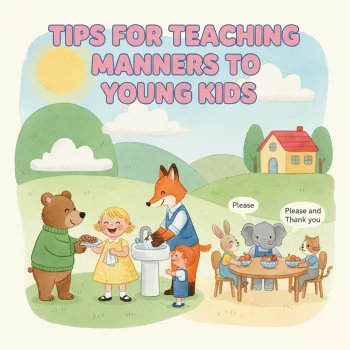
Teaching Manners to Toddlers and Preschoolers With Gentle, Positive Parenting
Manners are early social skills that help young kids feel confident, connected, and understood. The goal at toddler and preschool ages isn’t perfect politeness—it’s building habits like noticing others, using respectful words, and repairing mistakes with support. With steady modeling and simple routines, “good manners” become a normal part of daily life instead of a performance under pressure.
What “Good Manners” Look Like at Ages 2–5
At ages 2–5, manners are less about flawless wording and more about practicing relationship skills: taking turns, using gentle hands, and learning what to do after a misstep. A few high-impact basics go a long way—greetings, please/thank you, waiting, asking for help, and using words instead of grabbing.
- Expect uneven progress. Tired, hungry, overstimulated, or overly excited kids often “forget” skills they can do during calm moments.
- Teach manners as connection. Noticing feelings, pausing before acting, and making amends matter as much as the exact phrase.
- Keep benchmarks realistic. Toddlers may echo your words right after you; preschoolers can start using manners spontaneously, still with reminders.
| Age range | What’s realistic | Try saying |
|---|---|---|
| 2–3 | Short phrases with lots of modeling; may need hand-over-hand help and simple choices | “You can say ‘help please’.” / “Hands down—use words.” |
| 3–4 | Can practice turn-taking and greetings; needs reminders when excited | “Let’s try again—‘May I have a turn?’” / “Tell them ‘Hi’ with a wave.” |
| 4–5 | Can use manners in routines; can repair after slip-ups with coaching | “What can you say to make it right?” / “How can we show respect here?” |
Start With Connection: Calm Bodies Learn Faster
Manners are easiest to practice when a child feels safe, seen, and regulated. When little bodies are in “go mode,” the part of the brain that does waiting and listening goes offline—so the first step is often calming, not correcting.
- Regulate first. A calm, connected child can cooperate more easily with social rules like waiting and taking turns.
- Use kind proximity. Get to eye level, name what’s happening, and give one simple next step.
- Offer limited choices. “Do you want to say ‘please’ or ‘can I have that?’” reduces power struggles while still teaching the skill.
- Keep corrections brief and warm. Long lectures can trigger shame and make kids less cooperative next time.
Helpful framework: connect (“I’m here”), set the limit (“I won’t let you grab”), then coach (“Ask for a turn”).
Model the Manners You Want (Without Forced Performances)
Kids learn social language by hearing it used naturally—especially when adults say it consistently with real warmth.
- Narrate your own manners out loud. “Excuse me,” “Thanks for waiting,” “I’m sorry—let me fix that.”
- Model respectful boundaries. “No thank you” and “Not right now” teach polite refusal and consent.
- Keep affection separate from performance. Warmth stays steady whether your child says the words or not.
- Praise effort and impact. “You waited—thank you for being patient,” or “That made Grandpa smile.”
When adults consistently demonstrate repair—“Oops, I interrupted. Go ahead.”—kids learn that mistakes are normal and fixable.
Turn Daily Routines Into Practice Moments
Routines reduce pressure because the same scenarios repeat every day. That repetition is exactly what young kids need.
Meals
Build small scripts into snack and dinner: “please,” “no thank you,” passing items, and asking before taking. If a child reaches across someone’s plate, move the item back and coach: “Ask first—‘Can you pass that, please?’”
Playdates
Turn-taking is a manners “hot spot.” Use a visual timer and short phrases: “My turn/your turn.” If sharing is hard, start with trading: “You can have the truck when I’m done with the timer.”
Errands
Before entering, rehearse one rule and one reason: “Inside voice so others can shop calmly.” Then offer a job: “Can you help me find the apples?” Jobs help kids feel included and reduce impulsive behavior.
Bedtime
Recap one kind moment and one repair moment: “You said hi to the cashier” and “We practiced giving the toy back.” This normalizes learning and mistakes without turning manners into a moral scorecard.
Gentle Scripts for Common Manners Challenges
Short, repeatable scripts help adults stay steady and help kids know what to do next. Aim for neutral tone, clear limit, and one replacement behavior.
For extra support on social-emotional skills, see the CDC’s Positive Parenting Tips and guidance on preschool development from AAP HealthyChildren.org.
Practice Through Play: Stories, Role-Play, and Visual Supports
Zero to Three also has practical background on early social-emotional development, which is the foundation manners rest on.
A Printable Guide for Consistent, Low-Stress Practice
Printable manners tips and gentle parenting guide for toddlers and preschoolers
Baby’s First Cold Survival Checklist: Keep Calm & Cuddle On (printable)
FAQ
At what age should kids start learning manners?
Many toddlers can begin around age 2 with simple routines, lots of modeling, and short prompts. Preschoolers often use manners more independently, but they still need repetition and calm reminders—especially when tired or excited.
How can manners be taught without forcing a child to say “please” and “thank you”?
Model the words yourself, offer optional scripts, and practice during play when there’s no pressure. Focus on respectful behavior (waiting, gentle hands, asking) and guide repair after mistakes rather than shaming a child into performing.
What if my child is polite at home but not in public?
Public spaces can be overstimulating, so skills that work at home may fall apart when a child is hungry, tired, or excited. Pre-teach one expectation before entering, keep goals small, offer a job or choice, and role-play later to practice for next time.








Leave a comment